


Customer service automation uses AI and ML to handle repetitive tasks without human intervention.
• The Goal: Reduce “Cost per Ticket” while maintaining high CSAT.
• The Strategy: Use a Hybrid Model—automate high-volume FAQs (Tier 0) but keep humans in the loop for complex, high-emotion issues.
• The Result: Top brands see a 40% reduction in support costs and instant 24/7 response times.
Between a customer who receives quick resolutions and one who’s used to endless wait times, the difference in retention and repeat purchase behavior is significant. Quick service can make or break customer relationships, and automation has become an essential tool for businesses aiming to meet this rising demand.
To remain competitive, companies must not only respond quickly but also provide consistent and efficient service. The challenge of meeting this demand is made easier with AI. A recent report indicates that by 2025, 80% of customer service and support organisations will be applying generative AI technology in some form to improve agent productivity and customer experience (CX).
Read on as we explore the key trends in customer service automation and guide you on how to get started with implementing these technologies effectively.
What Is Automated Customer Service?
Traditionally, companies have relied on human agents to resolve customer queries and issues. While human agents remain critical for complex cases, many support tasks can be automated. Automated customer service involves automating support processes that may or may not require human intervention.
It upgrades support operations by utilizing technology to resolve customer queries, automate repetitive tasks, and streamline overall support processes. It is transforming how businesses handle customer interactions through technologies such as AI-driven chatbots, self-service portals, and integrated software systems.
Key solutions include:
• Knowledge bases for FAQs that provide instant answers
• Intelligent routing to connect customers to the right agents
• Predictive analytics to anticipate needs
• AI chatbots that respond, interpret, and escalate queries
For example, when a customer tracks an order, an AI chatbot retrieves status instantly. If there is a delay, the system proactively notifies the customer and offers alternatives without human involvement. This reduces response times and enhances the overall experience.
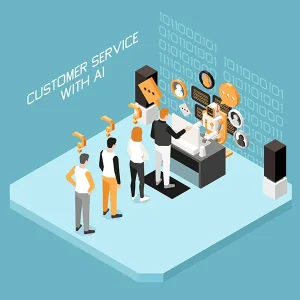 Core Benefits of Customer Service Automation
Businesses can handle large volumes of queries efficiently while improving customer experience through automation.
1. Increased Efficiency and Speed
Automated systems streamline routine tasks such as answering FAQs. This allows teams to focus on higher-value interactions and improves response rates significantly.
2. Cost Savings
Automation reduces operational costs by minimizing the need for large support teams. AI systems can handle multiple interactions simultaneously without additional staffing.
3. 24/7 Availability
Automation ensures round-the-clock support. Customers receive immediate assistance regardless of time zones or working hours.
4. Reduced Agent Workload
Repetitive tasks are handled by automation, allowing agents to focus on complex issues. This improves productivity and job satisfaction.
5. Consistency Across Channels
Automation ensures uniform service quality across email, chat, phone, and social media, building trust and reliability.
6. Improved Customer Experience
Automation enables personalised interactions using customer data, improving satisfaction and loyalty.
7. Effortless Scalability
As businesses grow, automation allows support operations to scale without proportional increases in resources.
Effective Strategies for Automating Customer Service
Below are key strategies to implement automation effectively:
- Deploy AI-powered chatbots for instant responses
- Automate repetitive workflows such as ticket creation
- Build a structured knowledge base for self-service
- Use AI-driven workflow analysis to identify inefficiencies
- Integrate automation with CX and CRM systems
- Implement intelligent ticketing systems
- Introduce AI-powered voice assistants
- Use templates for consistent responses
- Combine automation with human support
- Continuously analyse feedback and optimise systems
The Hybrid Support Framework: Balancing AI and Human Interaction
This framework defines where automation should lead and where human involvement is critical.
Simple Issues
Handled by AI bots for FAQs, tracking, and resets
Benefit: Instant resolution
Complex Issues
Handled by AI + human agents
Benefit: Accuracy and efficiency
Critical Issues
Handled by senior agents
Benefit: Empathy and relationship preservation
Measuring the Success of Automation
To ensure effectiveness, organisations must track performance metrics:
• Customer Satisfaction Scores (CSAT)
• Response and resolution times
• Drop-off rates in automated flows
• Ticket volume reduction
• Agent productivity improvements
These indicators provide visibility into both operational efficiency and customer experience.
Real-World Applications of Customer Service Automation
Automation has already transformed customer support operations:
• AI chatbots handling real-time queries
• IVR systems reducing call handling complexity
• Automated surveys collecting feedback
• Notifications providing real-time updates
• Knowledge bases enabling self-service
These implementations improve efficiency while enhancing customer satisfaction.
Implementation Roadmap for Automation
A structured approach ensures successful adoption:
- Identify repetitive and resource-heavy tasks
- Select tools aligned with existing systems
- Train teams on automation workflows
- Start with small deployments and scale gradually
- Continuously monitor and optimise performance
Automation is not a one-time setup; it requires continuous refinement.
The Future of Customer Service Automation
The future lies in deeper integration of generative AI and advanced machine learning. These technologies will enable more natural interactions, predictive support, and hyper-personalised experiences.
Despite technological advancements, the core expectation remains unchanged: customers want fast, effective solutions. Automation complements human agents, allowing them to focus on tasks requiring empathy and critical thinking.
This combination creates a responsive, scalable, and customer-centric support ecosystem.